R.I.P. Colon-Dash-Parenthesis: The Quiet Massacre of the Humble Text Emoticon
Photo: Cunalum, CC BY-SA 4.0, via Wikimedia Commons
Somewhere between 2010 and 2015, a murder took place. The victim? The humble text emoticon — that beautifully awkward string of keyboard characters that had served as the emotional backbone of digital communication since the early 1980s. The killer? A small, aggressively yellow circle with a face on it. The weapon? The iPhone keyboard update you didn't even read the patch notes for.
We didn't mourn. We barely noticed. One day you were typing :-P at your friend to indicate mild sarcasm, and the next day you were tapping a tiny cartoon tongue-face without a second thought. The revolution was bloodless, seamless, and completely devastating to an entire generation of punctuation-based self-expression.
The Emoticon Was Doing Just Fine, Thank You
Let's pour one out for what we had. The text emoticon wasn't just a workaround — it was an art form born from constraint. When your only tools were a keyboard and a chat window, you got creative. The classic smiley :-) and its winking cousin ;-) were just the beginning. By the mid-2000s, internet veterans had assembled entire libraries of sideways punctuation poetry. There was >:( for barely-contained fury. There was :3 for inexplicable cat-face contentment. There was even (╯°□°)╯︵ ┻━┻, which wasn't technically an emoticon but absolutely was the highest form of human expression.
These weren't just symbols. They were earned. You had to know them. You had to type them correctly. Messing up a :) and accidentally writing :( was a social minefield — the digital equivalent of accidentally texting your ex at 2 a.m. The emoticon demanded precision. It demanded craft. It had stakes.
Enter the Yellow Circle
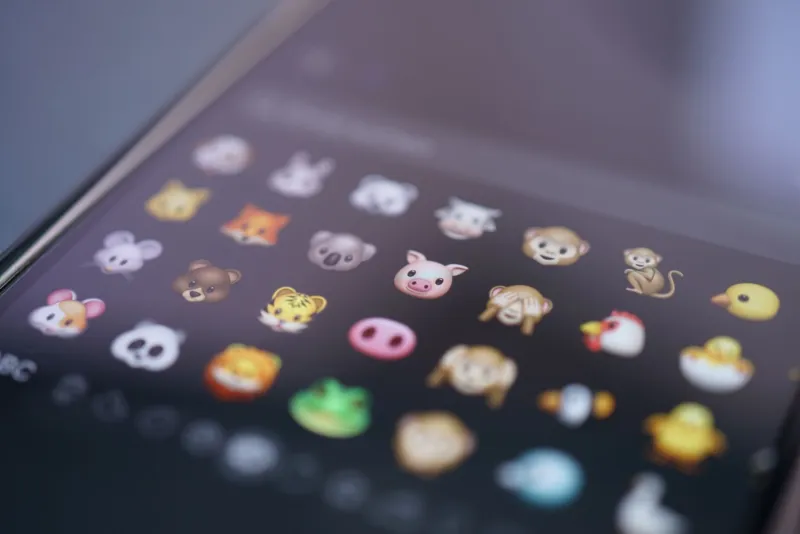
Emoji had technically existed in Japan since the late '90s, but they didn't crash America's digital party in earnest until Apple added an official emoji keyboard to iOS in 2011 and Google followed suit on Android shortly after. Suddenly, everyone's phone had a 722-character panic button labeled "feelings."
And listen — emoji were good. Nobody's going to sit here and pretend that 😂 didn't immediately communicate something that "LOL" had been failing to convey for fifteen years. The crying-laughing face alone probably saved thousands of friendships from misread sarcasm. The eggplant emoji launched an entirely new dialect of human courtship that we still haven't fully processed as a society.
But something was lost in the handoff. Something subtle and weird and kind of wonderful.
What the Emoticon Had That Emoji Never Could
Here's the thing about text emoticons that nobody wants to admit: they were ugly, and that ugliness was the point. When you typed :-/ to express vague existential uncertainty, the awkward little sideways face looked like vague existential uncertainty. It was uncomfortable to look at. It required a tilt of the head to even decode. It felt like the internet itself was shrugging at you.
Emoji are polished. Professional. They went through a design committee. The 😐 face is perfectly rendered, pixel-perfect, ready for a corporate Slack message at 9 a.m. The :-| of old had the energy of someone who hadn't slept in three days and was communicating primarily through facial twitches. These are not the same thing.
There was also the platform chaos, which was its own weird charm. AOL Instant Messenger auto-converted your :-) into a little yellow smiley, but only if you had the right version installed. Otherwise your friend saw the raw punctuation and had to mentally assemble it like an emotional jigsaw puzzle. Different chat clients rendered emoticons completely differently — what looked like a cheerful smile on your screen might show up as a mildly threatening grimace on someone else's. It was chaotic. It was a mess. It was ours.
The Transitional Awkward Phase Nobody Talks About
Between roughly 2011 and 2013, there was this genuinely hilarious transitional period where people were using both systems simultaneously and nobody had established the rules yet. You'd get a text that said something like "can't believe you did that lol 😂 ;-) haha" and it was like receiving a message from someone who was phasing between two dimensions.
Brands were the worst about this. Marketing teams who had just discovered emoji were deploying them with the restraint of a golden retriever in a tennis ball factory. Bank notifications. Pizza delivery confirmations. Dentist appointment reminders. All of them suddenly arriving with little cartoon faces bolted on like emotional bumper stickers. It was confusing. It was slightly alarming. It was, in retrospect, extremely 2012.
The Legacy of the Fallen
Text emoticons didn't completely disappear, to be fair. They retreated into niche usage — ironic callbacks, ASCII art corners of the internet, the occasional carefully deployed ¯_(ツ)_/¯ that no emoji has ever quite replicated. That shrug, specifically, survived the purge through sheer personality. It has energy that 🤷 simply cannot match.
And there's a whole generation of teenagers right now who use :) unironically in text messages — not because they're nostalgic for early internet culture, but because they've cycled back around to it as a retro aesthetic. The colon-parenthesis has become vintage. A collectible. The vinyl record of digital emotion.
Which is, when you think about it, exactly the kind of weird circular internet logic that the original emoticon pioneers would have expressed as :-)
Sideways, slightly confused, and weirdly proud of itself.