From :-) to 🥹: The Absolutely Unhinged Journey of How a Colon and Parenthesis Became a Thousand Yellow Faces
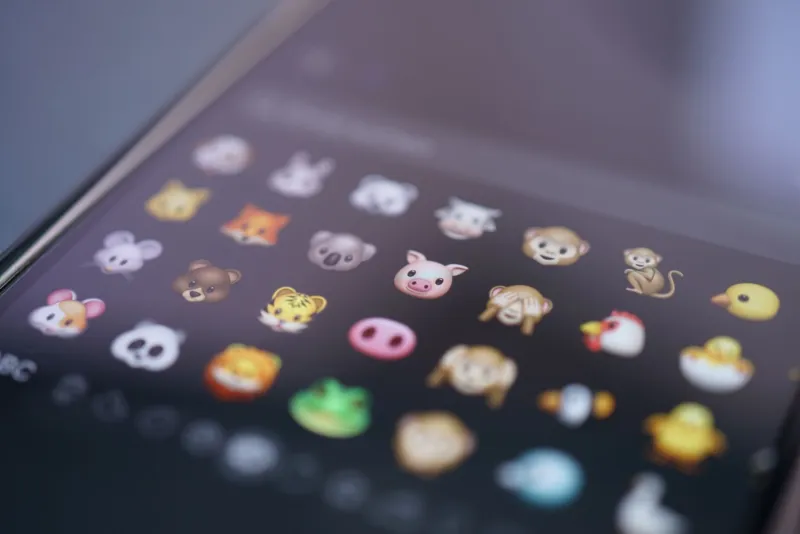
Let's take a moment of silence for the humble emoticon. Not because it died — it technically still lives on in the hearts of your one uncle who still texts like it's 2003 — but because it got absolutely steamrolled by a cultural force none of us were fully prepared for. We are talking, of course, about emoji. Specifically, the great migration that happened somewhere around 2011 and 2012, when Apple and Google quietly handed us a keyboard full of tiny yellow faces and watched civilization reorganize itself accordingly.
Before we get into the chaos, let's give credit where it's due.
The Old Guard: ASCII Emoticons and Their Quiet Dignity
The emoticon — born in 1982 when Carnegie Mellon professor Scott Fahlman typed :-) into a message board like a man who had absolutely no idea what he was starting — was a marvel of minimalist expression. You had your smiley. You had your frowny. You had the winking face ;-) for when you wanted to be flirty but retain plausible deniability. And if you were really adventurous, you were doing the full sideways face thing: :-D, :-O, >:( for rage, and the deeply chaotic ¯_(ツ)_/¯, which arguably did more emotional labor per character than anything before or since.
These emoticons required effort. You had to know the symbols. You had to type them in sequence. There was a craft to it. When someone sent you a :-) in an AIM message circa 2004, you felt it. That little sideways face was earned.
And then Apple shipped iOS 5 in October 2011 with an emoji keyboard built right in, and the sideways smiley face became the rotary phone of digital expression.
The Emoji Keyboard Arrives and Nobody Is Ready
Here's the thing about emoji: they didn't actually start with Apple. Japanese mobile carriers had been using emoji since the late 1990s, and tech-savvy users had been hacking emoji support into their iPhones for years before the official keyboard showed up. But when Apple made it mainstream — and Google followed suit with Android — it stopped being a niche curiosity and became the default language of the American smartphone user.
Suddenly, you didn't have to construct an emotion out of punctuation. You could just tap a face. Any face. There were faces for happy, sad, crying, laughing, winking, smirking, grimacing, and approximately eleven variations of a yellow circle with tears streaming down it. This was either the greatest leap forward in human communication since the printing press, or a profound act of creative laziness, depending on how much you miss your AIM away message.
The answer, honestly, is both.
The Laughing Emoji Problem (Yes, It's a Problem)
Let's talk about the laughing emoji situation, because it is genuinely unhinged when you sit with it. At peak emoji proliferation, you could express laughter through: 😂 (tears of joy, the dominant species), 🤣 (rolling on floor laughing, the aggressive cousin), 😆 (grinning squinting face, the underrated classic), 😄, 😃, 😁, and arguably 😹 if you were a cat person with no shame.
That is a lot of laughing faces. And yet — and this is the part that would have broken the brain of anyone using AIM in 2007 — none of them quite mean the same thing. 😂 in 2012 meant genuine laughter. By 2020, it had been so thoroughly adopted by millennials that Gen Z declared it cringe and started using 💀 to indicate something was funny. The skull. The death symbol. For funny. The emoticon people would never have allowed this.
The early 2010s were when we first started realizing that emoji were not a static language. They were a living, shifting system of meaning where context, generation, and platform all determined whether your 🙂 read as warm or passive-aggressive. (Spoiler: by 2013, the plain smiley face was already reading as vaguely threatening in certain company.)
The Sarcasm Casualty
Here is what the emoticon era handled surprisingly well and what emoji absolutely demolished: sarcasm.
With plain text and a ;-) or a strategically placed ellipsis, early internet users developed a sophisticated tonal vocabulary. You knew when someone was being sarcastic. The dry wit of a well-placed "oh sure, that's a great idea..." landed differently when it was just text, because text had stakes. You had to read it. You had to feel the weight of the words.
Emoji flattened a lot of that nuance. Once you could slap a 😒 or a 🙄 on the end of any sentence, you didn't have to construct the sarcasm — you just labeled it. Which, sure, reduced ambiguity, but it also reduced the artistry. The eye-roll emoji is doing work that used to require actual sentence construction. We traded wit for convenience and we should at least be honest about that trade.
Universal Language or Universal Chaos?
The argument in favor of emoji — and it's not a bad argument — is that they transcended text in a way the old emoticons never could. A ❤️ needs no translation. A 🎉 communicates across language barriers. When the Unicode Consortium (yes, there is a governing body for this, and yes, they have real meetings about whether a new dumpling emoji is necessary) standardized emoji across platforms, they were genuinely trying to build a visual language that worked everywhere.
And to a real extent, it worked. Early 2010s internet culture was the first moment where someone in Ohio and someone in Tokyo could exchange the same 😭 face and both understand that something was either devastating or extremely funny, depending on context. That's remarkable, actually. The colon-parenthesis crew never had that kind of reach.
What We Lost, What We Gained, and the 🫠 We Deserve
Looking back from our comfortable vantage point here at XYZ2010, the emoji migration of the early 2010s was one of those quiet cultural earthquakes that reshaped daily life without anyone filing an environmental impact report. We went from typed symbols that required creativity to a visual vocabulary that required only a thumb. We gained expressiveness and lost a little craft. We gained universality and lost a little specificity.
And we gained approximately 3,600 individual emoji (the current count as of recent Unicode updates), including a very specific face for "melting with embarrassment" (🫠) that the emoticon generation could only have dreamed of expressing in ASCII.
Would :-) have survived in the long run? Probably not. Language evolves. Tools get better. But somewhere out there, your dad is still typing :-) into his texts like a man out of time, and honestly? Respect. That colon and parenthesis built the foundation that a thousand yellow faces are standing on.
They deserve at least that much credit.