#Everything: The Magnificent Rise, Ridiculous Abuse, and Surprisingly Serious Legacy of the Hashtag
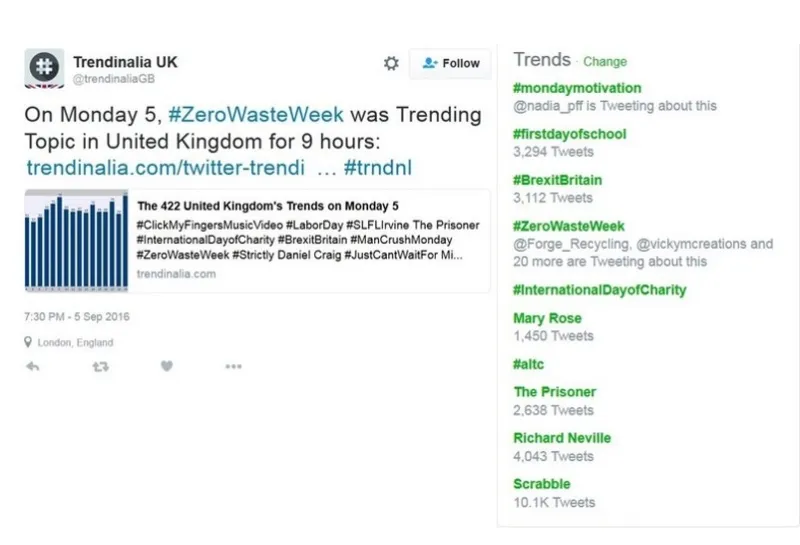
Photo: HouseofStrauss, CC BY-SA 4.0, via Wikimedia Commons
In the beginning, there was the pound sign. It lived quietly on your telephone keypad, doing very little of consequence, occasionally appearing in automated phone menus telling you to "press pound to repeat this message." It was a humble symbol. An overlooked symbol. A symbol with absolutely no idea what was coming.
Then Twitter happened, and the pound sign became the hashtag, and nothing was ever the same again — including, unfortunately, the way certain people wrote sentences.
The Origin Story Nobody Remembers Correctly
Here's a fun fact to deploy at parties: the hashtag as an organizational tool on Twitter was proposed in 2007 by a guy named Chris Messina, who just sort of... tweeted the idea. No press release. No product launch. Just a regular person suggesting that the # symbol could be used to group conversations. Twitter itself didn't even officially support clickable hashtags until 2009.
By the early 2010s, though, the hashtag had fully escaped the lab. It was everywhere. It had jumped from Twitter to Instagram (which launched in 2010 and immediately became hashtag ground zero), then to Facebook, then to the real world, where people were literally saying the word "hashtag" out loud in conversation before making a point. "I went to the gym this morning, hashtag blessed." This happened. People did this. Some of them were not being ironic.
The Golden Era of Hashtag Utility
Before we get to the chaos, let's acknowledge what hashtags actually did well, because the answer is: genuinely important things.
The Arab Spring in 2011 demonstrated that hashtags could function as real-time dispatches from the front lines of history, aggregating eyewitness accounts faster than any news organization could manage. #Occupy became a rallying point for economic frustration that translated from Twitter feeds to actual city parks across America. And then in 2012, the hashtag started showing up in conversations about race, gender, and systemic injustice in ways that would eventually grow into some of the most significant social media movements of the decade.
The hashtag, when used by actual humans with actual things to say, was a genuinely powerful tool for organizing collective attention around ideas that mainstream media was slow or reluctant to cover. That part was real. That part mattered.
Then Brands Discovered It and Everything Went Sideways
But then — oh, but then — the marketing departments arrived.
The years between 2011 and 2014 produced some of the most spectacularly miscalculated corporate hashtag deployments in recorded history. Companies would launch hashtag campaigns with the absolute confidence of someone who had read one article about social media engagement and considered themselves an expert.
The classic failure pattern went like this: brand creates optimistic hashtag like #TellUsHowGreatWeAre, assumes customers will flood Twitter with praise, and instead discovers that the internet is a fundamentally chaotic organism that loves nothing more than a pre-built container to fill with complaints. McDonald's launched #McDStories expecting wholesome fast-food memories and received an unbroken stream of food poisoning anecdotes. JPMorgan Chase tried #AskJPM as a Q&A opportunity and got approximately thirty seconds of genuine questions followed by a tsunami of pointed financial crisis commentary.
Every single one of these disasters was entirely predictable to anyone who had spent more than forty-five minutes on Twitter. The brands learned, eventually. Some of them.
The #YOLO Problem
We need to talk about #YOLO.
Drake's 2011 song "The Motto" gifted the internet with "You Only Live Once" as a philosophical framework, and the internet immediately weaponized it as a justification for every mildly inadvisable decision between 2011 and 2014. Ate an entire pizza at midnight? #YOLO. Quit your job to pursue interpretive dance? #YOLO. Jumped off a roof into a pool while someone recorded it for YouTube? Absolutely, emphatically #YOLO.
The hashtag transformed YOLO from a carpe diem sentiment into a punchline, a warning label, and eventually a genuine marker of a specific cultural moment — the way that "groovy" marks the '70s or "radical" marks the '80s. When future historians want to timestamp a piece of early 2010s content, they will look for three things: Instagram filters, Skrillex drops, and #YOLO.
The Over-Tagger Epidemic
Perhaps the most purely unhinged hashtag behavior of the era wasn't the brand disasters or the YOLO phenomenon — it was the regular person who decided that every word deserved a hashtag.
Instagram in 2012 was ground zero for this. You would open someone's photo of a cup of coffee and find, in the caption, a text wall that looked like a keyboard had a seizure: #coffee #morning #blessed #monday #mondayvibes #coffeelover #coffeeaddict #espresso #latte #caffeine #goodmorning #sunrise #love #instagood #photooftheday #happy #beautiful #picoftheday #follow #like4like.
This was not communication. This was search engine optimization applied to personal feelings. The hashtag had been designed to organize ideas across a platform, and here it was, being used to describe a beverage to an audience of 200 followers who already knew what coffee looked like.
And yet — and this is the part that's hard to argue with — it worked. Posts with more hashtags got more visibility. The algorithm rewarded the chaos. The internet, as always, found a way to make the rational choice feel completely insane.
What the Hashtag Left Behind
By the mid-2010s, the hashtag had matured into something more complicated than either its cheerleaders or its critics had predicted. It was simultaneously a tool for serious social organizing and a vehicle for the most superficial personal branding imaginable. It could amplify a protest and sell a protein powder in the same afternoon.
That tension — between the hashtag as genuine connective tissue for important conversations and the hashtag as pure performative noise — never really got resolved. It just became part of the landscape.
The pound sign went from telephone keypad afterthought to cultural infrastructure in about five years. Not bad for a symbol that used to just mean "number."