The Little Red Dot That Broke Our Brains: How Push Notifications Turned Our Phones Into Tiny Anxiety Machines
Let's set the scene. It's 2010. You've just downloaded your seventeenth free app from the App Store because, honestly, what else are you doing on a Tuesday. Life is fine. Your phone buzzes. It's a text from your mom. Normal. Expected. You respond, you move on, you eat your Lean Cuisine in peace.
Now fast-forward eighteen months. Your phone is vibrating on the table like a malfunctioning kitchen appliance. It's not your mom. It's not anyone you know. It's Angry Birds reminding you that you haven't played in two days. It's Words With Friends informing you that a stranger made a move. It's your weather app — your weather app — asking if you'd like to know that it might drizzle on Thursday. It's every single thing you ever installed, all of them screaming at once, and somehow you've accepted this as the baseline condition of modern life.
Welcome to the Notification Apocalypse. Population: everyone with a smartphone and increasingly frayed nerves.
How It Started: Innocent, Even Useful
Push notifications themselves weren't born evil. When Apple introduced them properly to developers in 2009 with iOS 3, the idea was genuinely sensible. Instead of apps constantly running in the background and draining your battery just to check for updates, the server would push a little alert to your phone when something actually mattered. New email. New message. Breaking news. The kind of things a reasonable human being might actually want to know about in real time.
For approximately five minutes, this was fine.
The problem — and it's almost poetic how predictable this is — is that "something that actually matters" turned out to be a very flexible concept once app developers realized they had a direct pipeline to your eyeballs. And your eyeballs, as any advertiser in history will tell you, are extremely valuable.
The Red Badge of Anxiety
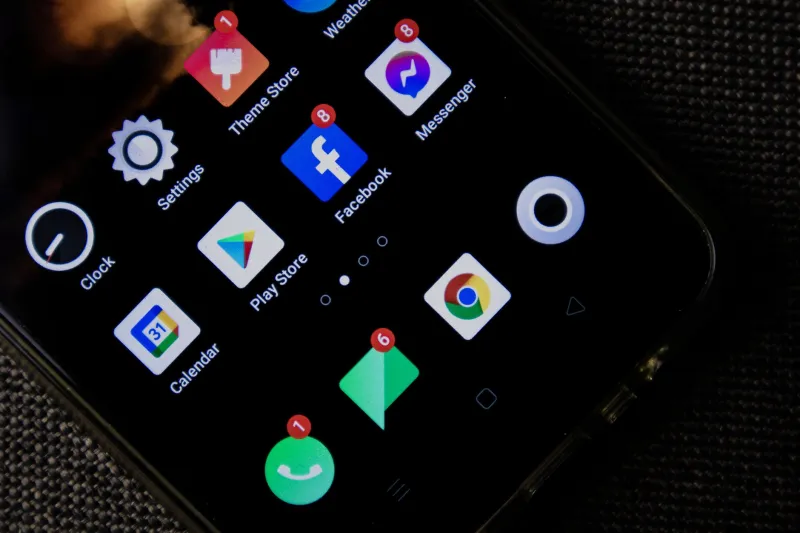
Here's where the psychology gets genuinely sinister, and also kind of fascinating. Developers discovered — through a combination of user research, behavioral data, and probably just watching people stare at their phones — that the little red badge icon sitting on an app was almost impossible to ignore. That number, glowing like a tiny accusation, triggered something primal. There is unfinished business. You must address the unfinished business.
Cognitive scientists would later call this kind of thing a "variable reward loop" — the same basic mechanism behind slot machines. You don't know what the notification is going to say. Maybe it's exciting. Maybe it's nothing. But the possibility that it might be exciting is enough to make you tap it every single time. Pavlov did this with dogs and bells. Silicon Valley did it with humans and Gmail.
By 2011 and 2012, the arms race was in full swing. Every app on your phone was competing for the same finite resource: your attention. And the easiest, cheapest, most effective way to grab it was to send a push notification. So they did. Constantly. Aggressively. For reasons that stretched the definition of "urgent" to its absolute breaking point.
The Notification Hall of Shame
Let's pour one out for some of the absolute audacity that defined this era.
Gaming apps were perhaps the most egregious offenders. If you played any kind of social or city-building game in the early 2010s — your FarmVilles, your Clash of Clans precursors, your various virtual restaurants that needed tending — you know the specific dread of seeing a notification that your crops had withered or your energy had refilled. These games were engineered to interrupt your life on a schedule. They wanted you back in the app. The notification was the leash.
Retail apps discovered that they could send you a push notification about a sale and some percentage of people would immediately open the app and buy something. So naturally, every sale became notification-worthy. Every "limited time offer." Every "just for you" discount that was absolutely also for everyone else.
And then there were the social apps, which turned every tiny interaction into a notification event. Someone liked your photo? Buzz. Someone commented? Buzz. Someone liked their own comment on your photo? Unclear if that actually triggered a notification, but honestly, it felt like it might have.
The Part Where We All Just... Let It Happen
What's genuinely remarkable about the Notification Apocalypse isn't that it happened. It's that we adapted to it so completely and so quickly that the interruption itself became the normal state of being.
Research from the early 2010s started showing that the average person was checking their phone dozens of times per day, and that even phantom phone buzzes — feeling a vibration that didn't actually happen — were becoming common. We had trained ourselves to be so attuned to potential notifications that our brains started hallucinating them. That's not a metaphor. That is a documented psychological phenomenon that smartphones caused in roughly three years.
And yet nobody staged a protest. Nobody deleted all their apps en masse. We just... turned the sound off on some of them, maybe, and kept going.
Part of this is because the notifications weren't only annoying. Sometimes they were genuinely useful. Sometimes that text alert was something you needed to see. The signal-to-noise ratio was terrible, but there was still a signal in there somewhere, and the cost of missing it felt worse than tolerating the noise. Developers knew this. They were counting on it.
The Legacy: Your Notification Drawer Is a Crime Scene
Scroll through your phone right now — go ahead, we'll wait — and look at your notification settings. There's almost certainly an app on there that has permission to notify you that you've never consciously granted. There's probably one that's been sending you alerts for two years that you've been dismissing without ever actually thinking about why it has that permission in the first place.
That's the real legacy of the early 2010s notification gold rush. Not just the annoying buzzes and the red badge numbers climbing into the double digits, but the normalization of constant digital interruption as a feature rather than a bug. The assumption, baked into every app's onboarding flow, that of course you want notifications, why wouldn't you, here's a pop-up asking you to enable them before you've even figured out what the app does.
We didn't walk into the attention economy with our eyes open. We got push-notified into it, one little red dot at a time.
Somewhere out there, a 2010 version of you is sitting quietly with a phone that only buzzes when something real happens. That version of you has no idea what's coming. Enjoy the silence, buddy. It's about to get very loud.