No Mute Button, No Rules, No Regrets: A Love Letter to the Unhinged Xbox Live Lobby Era
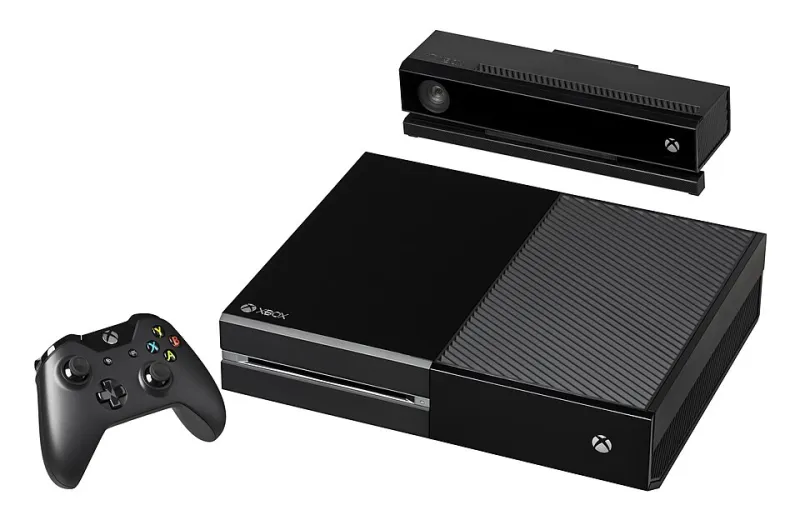
Photo: Evan-Amos, Public domain, via Wikimedia Commons
Picture this: it's a Friday night in 2011. You've finished your homework (maybe), cracked open a Mountain Dew Code Red, and settled into the couch with your Xbox 360 controller. The disc tray swallows your copy of Modern Warfare 2 or Black Ops or Halo: Reach. The matchmaking screen loads. And then — before a single bullet has been fired — the lobby erupts.
Someone's mic is picking up their entire living room. A kid who sounds approximately eleven years old is explaining, with remarkable confidence, exactly what he thinks of your mother. Someone else has their TV audio feeding back into the headset so everything they say arrives with a half-second echo. A random guy in the corner of the lobby is just... playing guitar. Unannounced. Unashamed.
This was Xbox Live in its prime. And we will never see its like again.
The Lobby as Social Ecosystem
Modern gamers who came up on Discord servers and streamer communities might struggle to understand what made the early 2010s multiplayer lobby so distinct. There was no curated community. No server owner with a list of rules pinned to the top. No moderation bot ready to timeout anyone who stepped out of line. You got dropped into a virtual room with eleven strangers, given absolutely no social guidelines, and left to figure it out.
The result was something that social anthropologists would probably find fascinating, assuming they could survive the first five minutes without muting everyone.
Lobby culture had its own internal hierarchy. At the top sat the guy with a 2.0 kill/death ratio and a gamertag that was clearly his primary personality. Below him, the veteran players who'd been on Xbox Live since 2006 and communicated mostly in sighs and dismissive callouts. Then there were the middle-skill players — your average American teenager just trying to have a good Friday night. And at the bottom, always, the New Guy who hadn't figured out how to mute his TV yet.
The trash talk was its own art form. Yes, a significant chunk of it was genuinely awful — the early 2010s had essentially zero cultural reckoning with what you could say to strangers online, and plenty of people took full advantage of that vacuum in ways that were not great. But there was also a subset of lobby trash talk that was legitimately creative. The guy who responded to every kill with an elaborate, improvised insult that somehow incorporated your gamertag? That took skill. Chaotic, pointless skill, but skill.
Halo Montages, Dubstep Drops, and the YouTube Industrial Complex
You cannot tell the story of early 2010s gaming culture without pausing to acknowledge the Halo montage. Specifically, the dubstep Halo montage.
The formula was sacred and non-negotiable: thirty seconds of slow-motion setup clips, then the bass drops — Skrillex, Nero, Flux Pavilion, take your pick — and suddenly you're watching a teenager execute a perfectly timed no-scope sniper shot soundtracked by what sounds like a robot having an emotional breakdown. The editing was aggressive. The text overlays were in Impact font (a theme in this era, apparently). The whole thing was uploaded to YouTube with a title like "MLG Pro Halo Reach Montage #7 INSANE TRICKSHOTS 2011."
These videos were genuinely aspirational content for a certain demographic of American teenage boy. The creators — many operating under handles like "xXSniperGodXx" or some variation thereof — weren't streamers in the modern sense. There was no Twitch. There was no Kick. There was just a YouTube channel, a video capture card that cost two months of lawn mowing money, and the dream of being recognized in a lobby.
Being recognized in a lobby, by the way, was the era's equivalent of going viral. If someone in a random matchmade game said "wait, are you the guy from that montage?" — you had made it. That was the whole metric.
The Strange Camaraderie Inside the Chaos
Here's the thing that gets lost when people look back at this era purely through the lens of its toxicity: the lobbies also produced genuine friendships.
Because there was no algorithm filtering your social experience, and because you kept getting matched with people in your geographic region or skill bracket, you'd run into the same players repeatedly over weeks and months. The guy you spent Tuesday calling terrible at the game became your impromptu teammate by Thursday. You learned each other's playstyles. You developed callout shorthand. You found out he was from Ohio and also hated the same teacher. You added each other as friends.
Xbox Live's friends list in this era was a legitimately organic social network — people you'd actually encountered, played with, and decided were worth keeping around. Not curated followers. Not an audience. Just people who happened to share a server and a game and a weird, formative moment in online social history.
Clan culture amplified this. If you ran with a crew — a named clan with matching gamertag prefixes, usually something like [xX] or [MLG] — you had a built-in community that predated Discord by half a decade. You organized in forum threads on Bungie.net or the Call of Duty forums. You scheduled scrimmages. You had drama. You had alliances. It was essentially a medieval guild system, except the kingdom was a fictional military shooter and the treasure was a slightly better K/D spread.
Why the Sanitized Version Can't Replicate It
Modern online gaming is, objectively, a more hospitable environment for more people. Voice chat moderation, reporting systems, and evolving community standards have made multiplayer spaces meaningfully less awful for players who were historically targeted by the worst of lobby culture. That's genuinely good. Let's be clear about that.
But something was also lost in the transition — and it's not the toxicity anyone misses. It's the wildness. The sense that anything could happen in a lobby, socially speaking. The absence of any corporate layer between you and eleven random strangers. The fact that the experience was entirely unscripted and therefore occasionally, improbably, perfect.
Streamer culture and esports professionalization have transformed gaming into a product in a way it simply wasn't in 2011. Every major multiplayer game now has a content creator program, a ranked competitive mode with behavioral enforcement, and a community management team monitoring social channels. The rough edges have been filed smooth. The experience is better designed and worse to tell stories about.
Nobody's making a YouTube video called "Wholesome Moment in Valorant Ranked Queue" that hits the same way as a 2011 clip of some kid in a Halo lobby accidentally befriending the person he'd been trash-talking for twenty minutes.
The Xbox Live lobby era was a specific convergence of technology, culture, and collective immaturity that existed in a window between "internet too small to matter" and "internet too corporate to breathe." It was the sweet spot. It was extremely loud. It smelled like Mountain Dew and carpet.
We kind of miss it.
— XYZ2010 Staff