Mute Button? Never Heard of Her: The Glorious Anarchy of Call of Duty Lobbies in Their Prime
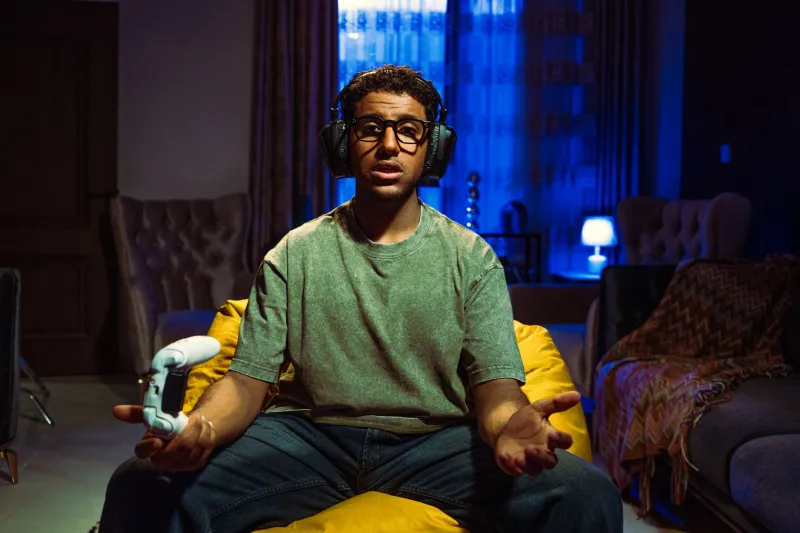
Somewhere between 2009 and 2012, millions of American teenagers plugged a headset into an Xbox 360 controller and accidentally enrolled themselves in the world's most chaotic finishing school for social interaction. The classroom was a pre-game lobby. The curriculum was entirely improvised. The graduation requirement was surviving approximately forty-five seconds of the most creative, unfiltered, deeply unhinged verbal sparring the internet has ever produced — and then doing it again, every single night, for three years straight.
Welcome back to the golden age of Call of Duty multiplayer. Population: everyone you went to middle school with, at least four people who were definitely not old enough to own this game, and one guy with a 47-kill game who would not, under any circumstances, shut up about it.
The Lobby Was the Game
Here's something that gets lost when people talk about Modern Warfare 2's legendary status: the actual matches were almost secondary. Sure, the gameplay was tight, the maps were iconic, and the killstreak system turned ordinary Friday nights into legendary moments you'd describe at lunch on Monday. But the real theater? It happened in the thirty seconds before the match loaded.
The pre-game lobby was a pressure cooker of social performance. You had a headset, you had an audience, and you had a very limited window to establish dominance, make everyone laugh, or at minimum avoid becoming the night's main target. Some kids crumbled. Others thrived. A rare few developed what can only be described as a genuine comedic talent — honed entirely through the crucible of being called bad at a video game by a stranger in Ohio.
The trash talk itself was an art form with unspoken rules. There were callbacks, escalations, and the occasional moment of genuine wit that made even the person being roasted break into laughter. And then there were the absolute unhinged wildcards — the kid who'd go dead silent for ten minutes and then, completely unprompted, announce that he was going to "snipe your whole family." Not threatening. Just deeply, specifically weird. And somehow everyone understood the assignment.
The 1v1 Me Quickscope Pipeline
No retrospective on this era is complete without a proper tribute to the 1v1 challenge economy. If you performed well in a match — or, critically, if someone believed you performed well due to pure luck — there was a very real chance you'd receive a formal invitation to prove yourself on Rust, the game's smallest map, in a sniper-only duel that carried approximately the same social weight as a medieval joust.
"1v1 me on Rust, no attachments, quickscope only" was the early 2010s equivalent of a duel at dawn. Accepting meant you were serious. Declining meant you were a coward. The actual outcome of the 1v1 was almost irrelevant — what mattered was the ceremony, the trash talk leading up to it, and the absolutely unhinged post-match analysis regardless of who won.
Quickscoping itself deserves its own hall of fame. Technically, it was a glitch-adjacent technique that Infinity Ward famously tried and repeatedly failed to patch out. Culturally, it was a identity. Kids had YouTube channels dedicated entirely to quickscope montages set to dubstep. They had clans. They had drama. The quickscope community had more internal politics than a student government election, and it took itself approximately twice as seriously.
The Characters You Met Every Night
One of the quietly magical things about this era was the recurring cast of lobby archetypes that you'd encounter so reliably they might as well have been NPCs. There was The Veteran, who had been playing since Call of Duty 4 and wanted everyone to know it. There was The Rager, who started the match in a perfectly reasonable mood and descended into complete emotional chaos by the third death. There was The Kid Who Was Definitely Lying About His Age, whose voice cracked at a frequency that suggested he was perhaps eleven years old but whose gamertag included the number 420.
And then there was the guy who claimed to know someone at Infinity Ward. Every lobby had one. He had insider information about the next patch. He knew the developers personally. He was, without exception, completely making all of it up — but in 2010, before everyone had instant access to verified game news on Twitter, there was a brief, beautiful window where you just weren't totally sure. You had to at least hear him out.
When the Sanitization Came
It's worth being honest: those lobbies were not always a nice place to be. The same freedom that produced genuinely funny, creative moments also produced harassment, slurs, and the kind of behavior that made gaming feel genuinely unwelcoming to a lot of people. That's not nostalgia-bait — it's just true.
But the overcorrection that followed is what makes this era feel so specifically frozen in amber. As gaming grew into a multi-billion dollar corporate enterprise, the rough edges got sanded down hard. Voice chat became optional, then rare, then practically vestigial. Reporting systems multiplied. Lobbies became quieter. The chaos was contained — and with it, a lot of the accidental community that chaos had created.
Modern gaming lobbies, when they exist at all, feel like waiting rooms. Polite. Quiet. Nobody is threatening to 1v1 anyone. Nobody's uncle works at Activision. The whole ecosystem that produced a generation of people who can take a verbal hit and fire back without flinching has been replaced with something far more orderly and, honestly, far less interesting to remember.
The Time Capsule Version
Here at XYZ2010, we believe that the messiest parts of early internet culture are often the most worth preserving — not because they were perfect, but because they were real in a way that's genuinely hard to manufacture. Those lobbies were unscripted, unsponsored, and completely unaware that anyone would ever look back on them fondly.
Somewhere right now, there's a thirty-year-old who still instinctively knows the exact cadence of "GET REKT, SCRUB" and feels a complicated emotion they can't quite name when they hear the Modern Warfare 2 menu music. That's not just nostalgia. That's a generation's entire online adolescence, compressed into a thirty-second pre-game lobby and a headset that cost nineteen dollars.
Press start. The lobby's waiting.